
Tibet and South Asia: A 16-Day Private Air Journey Across India, Nepal, Tibet, the Maldives and Sri Lanka
TCS World Travel operates this 16-day private air expedition departing January 27, 2028 and returning February 11, 2028, visiting seven destinations across six countries. The expedition departs and returns via Singapore, moving through Bhopal and Satpura Forest in India, the Himalayan Foothills of Nepal, Tibet, the Maldives and Sri Lanka’s Cultural Triangle. The trip takes place aboard an Airbus A319 VIP aircraft* accommodating 37 guests. Pricing starts at $135,000 per person based on double occupancy, with a $13,500 solo supplement for Premium seating. An upgrade to Premium Ottoman seating starts at $139,000.
Tibet and South Asia combines many of South Asia’s most important cultural, spiritual and natural landmarks into a single journey. Over 16 days, guests visit UNESCO World Heritage Sites in India, Nepal, Tibet and Sri Lanka; search for wildlife in Satpura Tiger Reserve; experience Himalayan wellness traditions in Nepal; explore Tibetan Buddhist landmarks in Lhasa; and discover the coral reef ecosystems of the Maldives. The itinerary is designed to provide a broad introduction to the history, cultures, religions and landscapes that have shaped South Asia for centuries.
Expedition Overview
- Duration: 16 days
- Dates: January 27 – February 11, 2028
- Destinations: 7 stops – Singapore → Bhopal, India → Satpura Forest, India → Lower Himalayas, Nepal → Tibet, China or Kathmandu, Nepal → Maldives → Cultural Triangle, Sri Lanka → Singapore
- Aircraft: Airbus A319 VIP
- Maximum Guests: 37
- Price: From $135,000 per person, double occupancy; $13,500 solo supplement
- Optional Pre-Trip Extension: Singapore, January 25 – 27, 2028
Trip Highlights
South Asia’s Most Significant Cultural and Natural Landscapes
Tibet and South Asia brings together many of the region’s most important UNESCO World Heritage sites, wildlife habitats, spiritual centers and natural environments within a single journey. Over 16 days, guests explore prehistoric rock art in India, tiger habitat in Satpura, Buddhist monasteries in Nepal and Tibet, coral reefs in the Maldives and ancient capitals in Sri Lanka. While each destination offers a distinct experience, together they provide a broad introduction to the cultural, historical and ecological diversity that defines South Asia.
Hard-to-Combine Destinations Linked by Private Air
Replicating this itinerary independently would require multiple international and domestic flights, complex permit arrangements and extensive overland transfers. Tibet requires special travel permits and restricted-entry procedures, while reaching destinations such as Satpura Tiger Reserve, Dhulikhel and Sri Lanka’s Cultural Triangle typically involves additional connections beyond major gateway cities.
The private plane allows guests to move efficiently between six countries and several remote regions while avoiding many of the logistical challenges associated with commercial travel. As a result, travelers can spend more time exploring UNESCO sites, wildlife reserves and cultural landmarks rather than navigating airports and connections.
Singapore as the Gateway to South Asia
The expedition begins in Singapore with an overnight stay at The Raffles Singapore, one of the world’s great 19th-century hotels. Guests gather for a welcome dinner to kick off their journey.
An optional two-night pre-trip package in Singapore is available from January 25 – 27, 2028. The pre-trip program includes futuristic gardens, private museum access and a Tai Chi session, adding more time in Singapore before the main expedition begins.
Bhopal and the Prehistoric Cave Art of Bhimbetka
The India portion begins in Bhopal, a city known for lakes, Mughal architecture and the legacy of the Begums, the female rulers who shaped the city’s palaces, mosques and civic identity. Guests stay at Taj Lakefront, Bhopal, set on the shores of Upper Lake.
En route to Satpura, the itinerary visits the UNESCO-listed Bhimbetka Caves. The caves contain prehistoric paintings, some more than 10,000 years old, preserved within sandstone cliffs and forested hills. Bhimbetka adds an archaeological and human-history dimension before the journey moves into India’s wildlife landscapes.
Satpura Forest and India’s Quieter Safari Experience
Satpura Forest is one of the expedition’s Explorer Destinations, selected for remote beauty, wildlife access and cultural or historical significance rather than conventional luxury lodging. Guests stay for two nights at either Bori Safari Lodge or Reni Pani Jungle Lodge near Satpura Tiger Reserve.
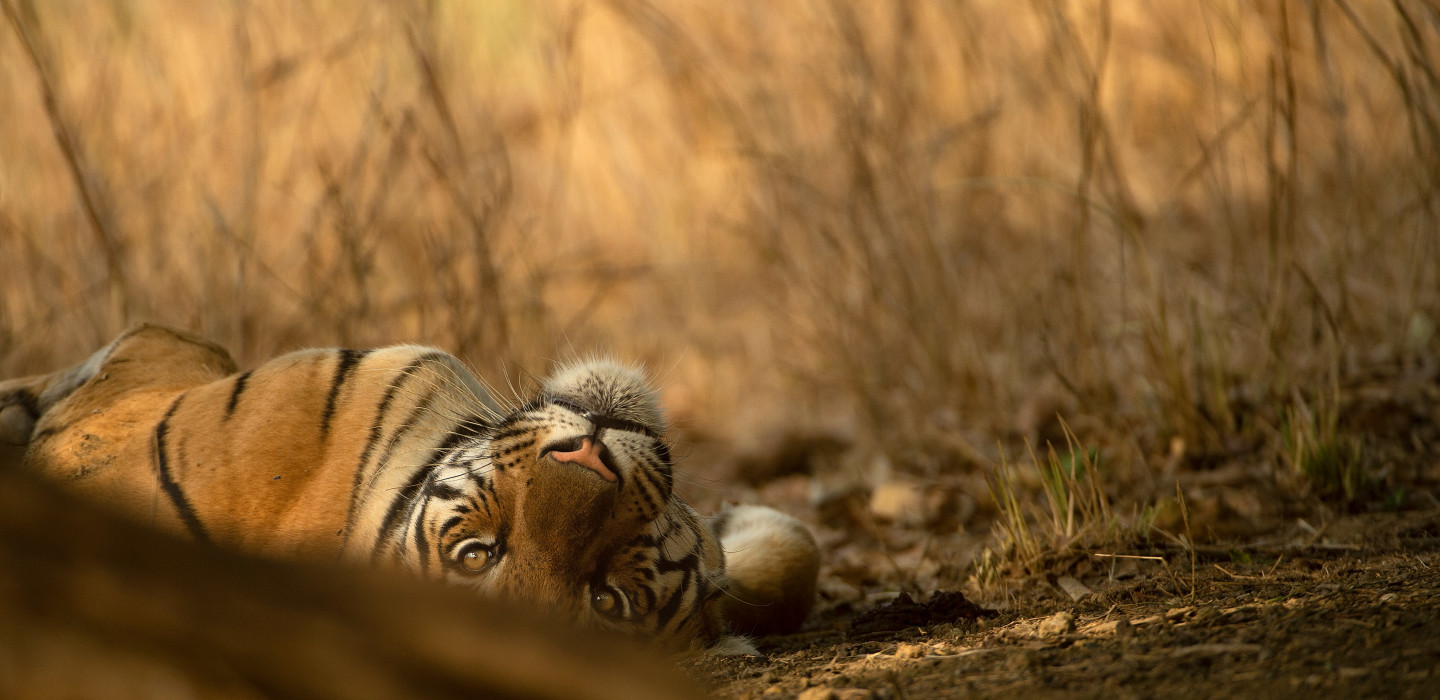
The safari program includes guided jeep safaris in search of tigers, leopards, sloth bears, wild dogs, gaur, deer and birdlife. The itinerary also includes night safaris, a distinctive feature because Satpura is one of the few parks in India to offer evening safari access. After dark, guests may encounter owls, nightjars and nocturnal predators such as leopards.
Nepal’s Lower Himalayas: Wellness, Villages and Sacred Sites
The Nepal portion is based in the Lower Himalayas near Dhulikhel, where guests stay at The Dwarika’s Sanctuary, a 25-acre wellness retreat rooted in Himalayan and Ayurvedic traditions. The stay emphasizes yoga, meditation, Ayurveda, sound healing and holistic consultations.
Cultural experiences include Namobuddha Monastery, one of Nepal’s sacred Buddhist sites that sits within a landscape of terraced farmland and quiet village paths rarely reached by short-stay visitors, and Panauti Village, a medieval Newari town with temples, sacred ghats and Hindu-Buddhist shrines. The itinerary also includes a hillside walk to Kali Temple and a visit to Darimbot, The Dwarika’s eco-organic farm, where guests can enjoy lemongrass tea and honey from the property’s own hives.
Lhasa and the Spiritual Heart of Tibetan Buddhism
Lhasa has served as the religious and cultural center of Tibetan Buddhism for centuries. The city is home to some of Tibet’s most important landmarks, including Potala Palace, the former winter residence of the Dalai Lama; Jokhang Temple, considered Tibet’s most sacred temple; and Sera Monastery, where monks continue the tradition of public philosophical debate. Together, these sites provide insight into the religious traditions, architecture and cultural heritage that have shaped Tibetan identity for generations.
Low-Altitude Kathmandu Alternative
For guests who prefer not to travel to Tibet, Kathmandu, Nepal is offered as a low-altitude alternative. The Kathmandu program includes UNESCO sites in the valley, including Patan’s Durbar Square, Boudhanath Stupa and Pashupatinath. Guests on this Explorer Destination alternative stay at The Dwarika’s Hotel and may also take a weather-permitting Everest flightseeing excursion.
The Maldives as a Mid-Journey Marine Retreat
The Maldives introduces a different dimension of South Asia, shifting the focus from mountains, wildlife reserves and ancient cultural sites to one of the world’s most celebrated marine ecosystems. Guests stay at The Ritz-Carlton Maldives, Fari Islands, located within a lagoon system known for coral reefs, tropical fish, rays and sea turtles.
The Maldives segment also creates a natural transition between the Himalayan and Sri Lankan portions of the journey. After exploring high-altitude landscapes and historic sites, guests spend three nights focused on marine life, conservation and relaxation before continuing to Sri Lanka’s ancient kingdoms and wildlife reserves.
Sri Lanka’s Cultural Triangle and UNESCO Heritage
The final major stop is Sri Lanka’s Cultural Triangle, where guests spend three nights at Water Garden Sigiriya, a serene retreat featuring plunge pools and gardens. This portion of the itinerary is also designated as an Explorer Destination.
The Sri Lanka program includes Dambulla Caves, Sigiriya Rock Fortress, Minneriya National Park and Polonnaruwa. At Dambulla, guests visit painted cave temples with frescoes, Buddhist imagery and a recumbent Buddha carved from living rock. At Sigiriya, guests ascend the UNESCO-listed rock fortress associated with King Kasyapa, including water gardens, frescoes and the mirror wall.
Minneriya National Park adds a wildlife component, with a jeep safari through habitat known for the seasonal gathering of wild Asian elephants. Polonnaruwa, Sri Lanka’s medieval capital and a UNESCO World Heritage site, includes the museum, Royal Palace complex, Quadrangle and Gal Vihare statues.
Hotels Throughout the Journey
Accommodations are selected to reflect the character of each destination while providing convenient access to key experiences.
- Mandarin Oriental Singapore: Set in the heart of Marina Bay and the expedition’s starting point.
- Taj Lakefront, Bhopal: Lakeside base for exploring Bhopal and Bhimbetka.
- Bori Safari Lodge or Reni Pani Jungle Lodge: Safari-focused lodges near Satpura Tiger Reserve.
- The Dwarika’s Sanctuary: Wellness retreat in Nepal’s Lower Himalayas.
- The St. Regis Lhasa: Luxury base for exploring Tibet’s major cultural landmarks.
- The Ritz-Carlton Maldives, Fari Islands: Private island resort focused on marine experiences.
- Water Garden Sigiriya: Nature-oriented retreat near Sigiriya and Sri Lanka’s Cultural Triangle.
Frequently Asked Questions
Who is Tibet and South Asia designed for?
Tibet and South Asia is designed for experienced travelers who want to move across South Asia’s widest arc—prehistoric cave art, active tiger reserves, sacred Himalayan monasteries, Tibetan heritage, coral reef ecology, and Sri Lankan wildlife—within a single 16-day program without the planning complexity of assembling those elements independently. Travelers should be comfortable with geographic and climatic variety: the route moves between tropical, alpine, and high-altitude environments in rapid sequence. This is not the right expedition for travelers seeking a single-destination immersion, those who require consistently warm conditions throughout, or anyone with concerns about high-altitude exposure—the Tibet stop sits at approximately 3,650 meters (11,975 feet) above sea level, with conditions that differ significantly from the rest of the route.
How does the Tibet and South Asia expedition differ from other South Asia itineraries?
Unlike most South Asia itineraries that visit either India’s cultural monuments or its wildlife destinations—or focus on a single country such as Sri Lanka, Nepal, or India—this expedition combines all of these in sequence across six countries within a single 16-day private air program. The inclusion of Satpura Forest, which has no commercial air access, and the Himalayan Foothills of Nepal, where mountain airstrips are unsuitable for commercial jets, are only possible because of the private aircraft routing. Compared to individual-country tours of similar duration, this expedition trades depth at any single destination for a breadth of encounters—from prehistoric rock art and active tiger reserves to Himalayan monasteries, Tibetan sacred sites, Maldivian reefs and Sri Lanka’s elephant country. That is not achievable through any other single commercial itinerary.
Why are India, Nepal, Tibet, the Maldives and Sri Lanka combined on one itinerary?
These destinations highlight different dimensions of South Asia. India contributes wildlife reserves, prehistoric archaeology and historic cities. Nepal and Tibet provide access to Himalayan culture and Buddhist traditions. The Maldives introduces the region’s marine environments and coral reef ecosystems. Sri Lanka adds ancient kingdoms, UNESCO World Heritage sites and wildlife. Together, they create a broad exploration of South Asia’s cultural, religious, historical and natural diversity.
Why would this itinerary be difficult to replicate independently?
The route includes destinations with complex commercial air connections, ground transfers and regional logistics, including Satpura Forest, Dhulikhel, Lhasa, the Maldives and Sri Lanka’s Cultural Triangle.
What is the focus of this trip?
This is a highlights journey through South Asia. The itinerary combines many of the region’s most sought-after experiences—including wildlife safaris, Buddhist and Hindu heritage sites, Himalayan culture, tropical islands and ancient cities—within a single private aircraft expedition.
What are the signature experiences on this itinerary?
Signature experiences include Bhimbetka Caves, jeep and night safaris in Satpura Tiger Reserve, wellness at The Dwarika’s Sanctuary, Potala Palace, Sera Monastery, snorkeling and diving in the Maldives, Sigiriya, Dambulla, Minneriya National Park and Polonnaruwa.
Are there many UNESCO World Heritage sites on this itinerary?
Tibet and South Asia includes several UNESCO World Heritage sites across India, Nepal, Tibet and Sri Lanka. Highlights include the Bhimbetka Rock Shelters in India; Potala Palace and Norbulingka in Lhasa; and Sigiriya Rock Fortress, the Dambulla Cave Temple Complex and the ancient city of Polonnaruwa in Sri Lanka. Guests choosing the Kathmandu alternative also visit UNESCO-listed sites in the Kathmandu Valley, including Patan Durbar Square, Boudhanath Stupa and Pashupatinath. The concentration of UNESCO sites provides a historical and cultural framework that connects many of the destinations throughout the journey.
Can guests choose their own activities at each destination?
Yes. Most destinations on this expedition include multiple curated experience options from which guests can choose.
Is Tibet included on the itinerary?
Yes. The main itinerary includes two nights in Lhasa, Tibet, with visits to Potala Palace, Norbulingka, Sera Monastery and Jokhang Temple.
Why is there a Kathmandu alternative to Tibet?
Tibet’s high elevation can present challenges for some travelers. To provide greater flexibility, guests may choose a parallel program in Kathmandu, Nepal. This alternative includes UNESCO World Heritage sites such as Patan Durbar Square, Boudhanath Stupa and Pashupatinath, as well as accommodations at The Dwarika’s Hotel and an optional Everest flightseeing experience, weather permitting. The alternative allows guests to remain within the overall expedition while avoiding the higher elevations of Lhasa.
What wildlife can travelers hope to see in Satpura?
Satpura wildlife viewing may include tigers, leopards, sloth bears, wild dogs, gaur, deer and extensive birdlife. Night safaris may reveal owls, nightjars and nocturnal predators.
Why is the Maldives included in this itinerary?
The Maldives provides a restorative marine interlude between the Himalayan and Sri Lankan portions of the journey. Guests stay at The Ritz-Carlton Maldives, Fari Islands and can snorkel, dive, take spa treatments, kayak, paddleboard or join guided reef activities.
Why is Satpura Tiger Reserve included instead of India’s more famous safari parks?
Satpura offers a different safari experience than better-known reserves such as Ranthambore or Bandhavgarh. Visitor numbers are generally lower, creating a quieter wildlife experience, while the reserve supports tigers, leopards, sloth bears, wild dogs and extensive birdlife. Satpura is also one of the few parks in India where night safaris are permitted, providing opportunities to observe nocturnal wildlife that are not available in many other reserves.
How physically demanding is this trip?
Most activities are moderate in difficulty, but some excursions involve walking, uneven terrain and stairs. Guests visiting Potala Palace in Lhasa and Sigiriya Rock Fortress in Sri Lanka should expect extended stair climbing. Wildlife viewing in India and Sri Lanka is conducted primarily by vehicle, while wellness and cultural activities in Nepal can be adapted to individual comfort levels. Travelers concerned about altitude may choose the Kathmandu alternative rather than visiting Tibet.
What is the weather like across this expedition in late January and early February?
Late January and early February brings distinctly different conditions at each stop. Singapore is warm and humid year-round, with occasional afternoon showers. Bhopal and Satpura Forest in central India are cool and dry—among the better months for wildlife sightings, as animals gather near water sources during the dry season. Nepal’s Himalayan Foothills are cool to cold, with typically clear skies at this time of year, though mountain weather can shift quickly. Tibet in January is cold: Lhasa temperatures can drop well below freezing overnight, and conditions are dry. The Maldives is in its dry season, with calm seas and reliable sunshine. Sri Lanka’s Cultural Triangle in late January is hot and relatively dry, with conditions well-suited to outdoor touring and safari.
What does Tibet and South Asia cost and what is included?
Tibet and South Asia is priced from $135,000 per person for Premium seating based on double occupancy, with a $13,500 solo supplement. Premium Ottoman seating is available from $139,000 per person based on double occupancy, with a $13,500 solo supplement.
This private air expedition includes:
- All flights aboard the private aircraft
- Luxury hotel and lodge accommodations at each destination
- Curated experiences at each destination, with guest-selectable options at most stops
- On-trip physician traveling with the group throughout the expedition
- Expedition leaders throughout the entire program
- All meals, including group dining experiences at each destination
- Ground transportation and private transfers at every stop
- All gratuities
What is TCS World Travel?
TCS World Travel is a luxury travel company specializing in all-inclusive private jet expeditions and custom global journeys. Since 1991, the company has pioneered multi-destination travel by private aircraft, combining seamless logistics with expert-led programming and curated local access across more than 200 destinations worldwide.
Having operated over 300 private jet expeditions, TCS World Travel is recognized as a leader in the category, with honors from Travel + Leisure World’s Best Awards, AFAR Travelers’ Choice Awards, Condé Nast Traveler Readers’ Choice Awards, and Departures Legend Awards.
For full itinerary details and availability, visit Tibet and South Asia – January 2028.
*Aircraft operated by BeOnd Airlines